
DEEP Listening – Pauline Oliveros
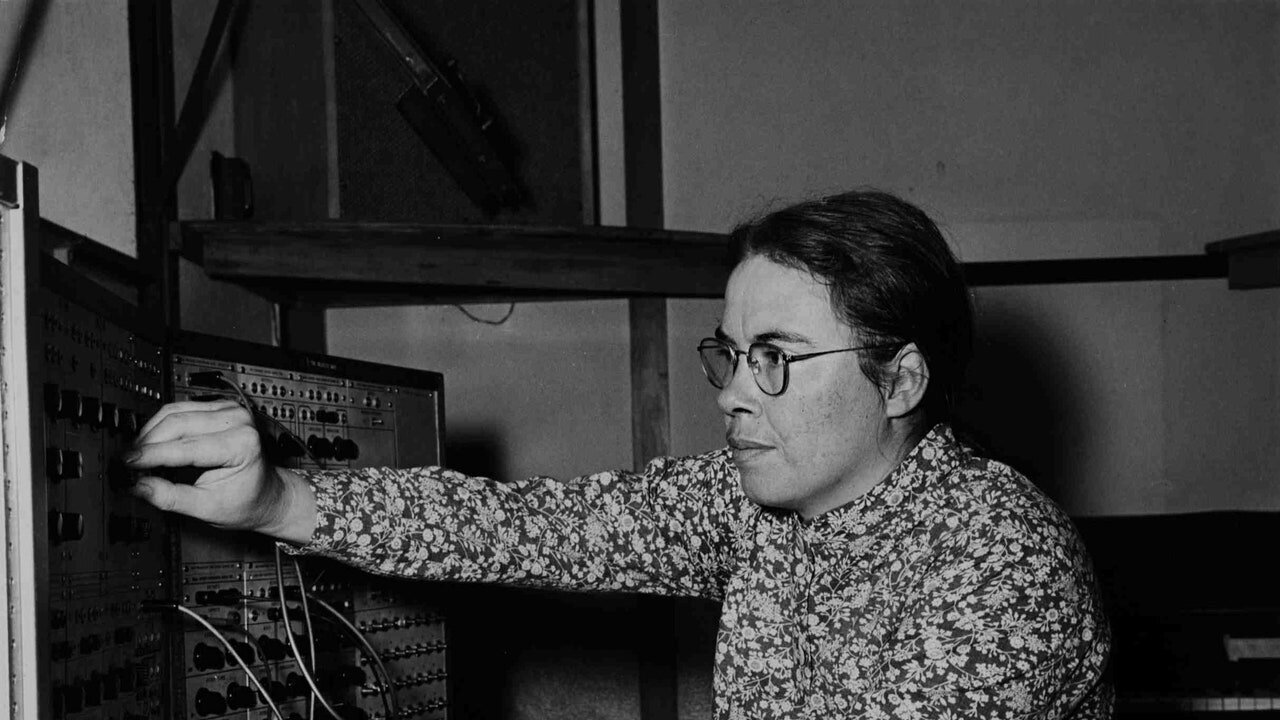
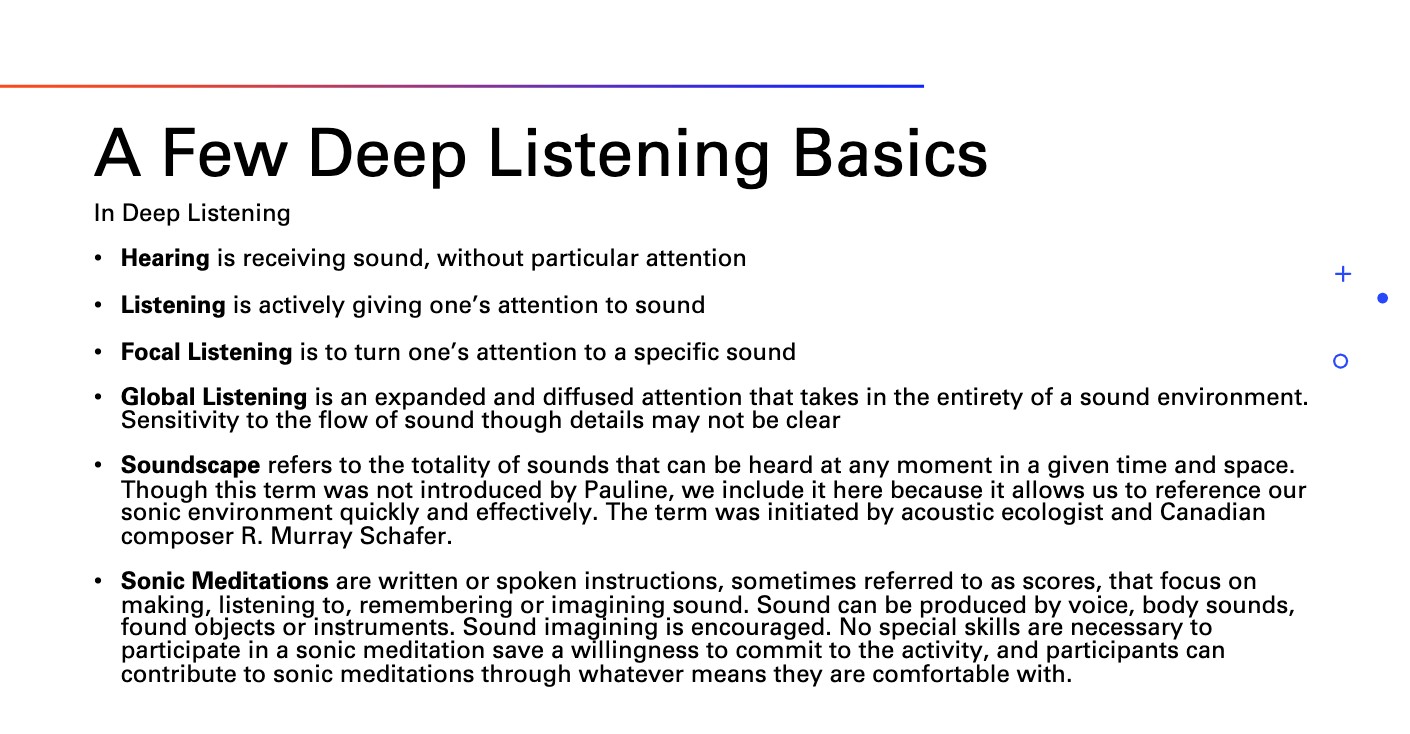
Deep Listening is a method developed by Oliveros to cultivate a conscious awareness of the sonic environment through auditory, oral, somatic, and imaginative strategies. Deep Listening strengthens our ability to be voluntarily attentive to sound through a constellation of practices that include body work, sonic and listening meditations, interactive performance, dreaming, memory, and listening to listening itself. The composer described listening as a necessary pause before thoughtful action: “Listening is directing attention to what is heard, gathering meaning, interpreting and deciding on action.
LISTEN:
Learn to listen with your whole body & mind. You will explore how sound and our sense of hearing shape our daily lives. Listening connects us to others and our environments. Listening is an act of care, a perspective that allows us to know ourselves as connected to others in a web of relationships. (both human & non-human)
Follow the listening exercise below
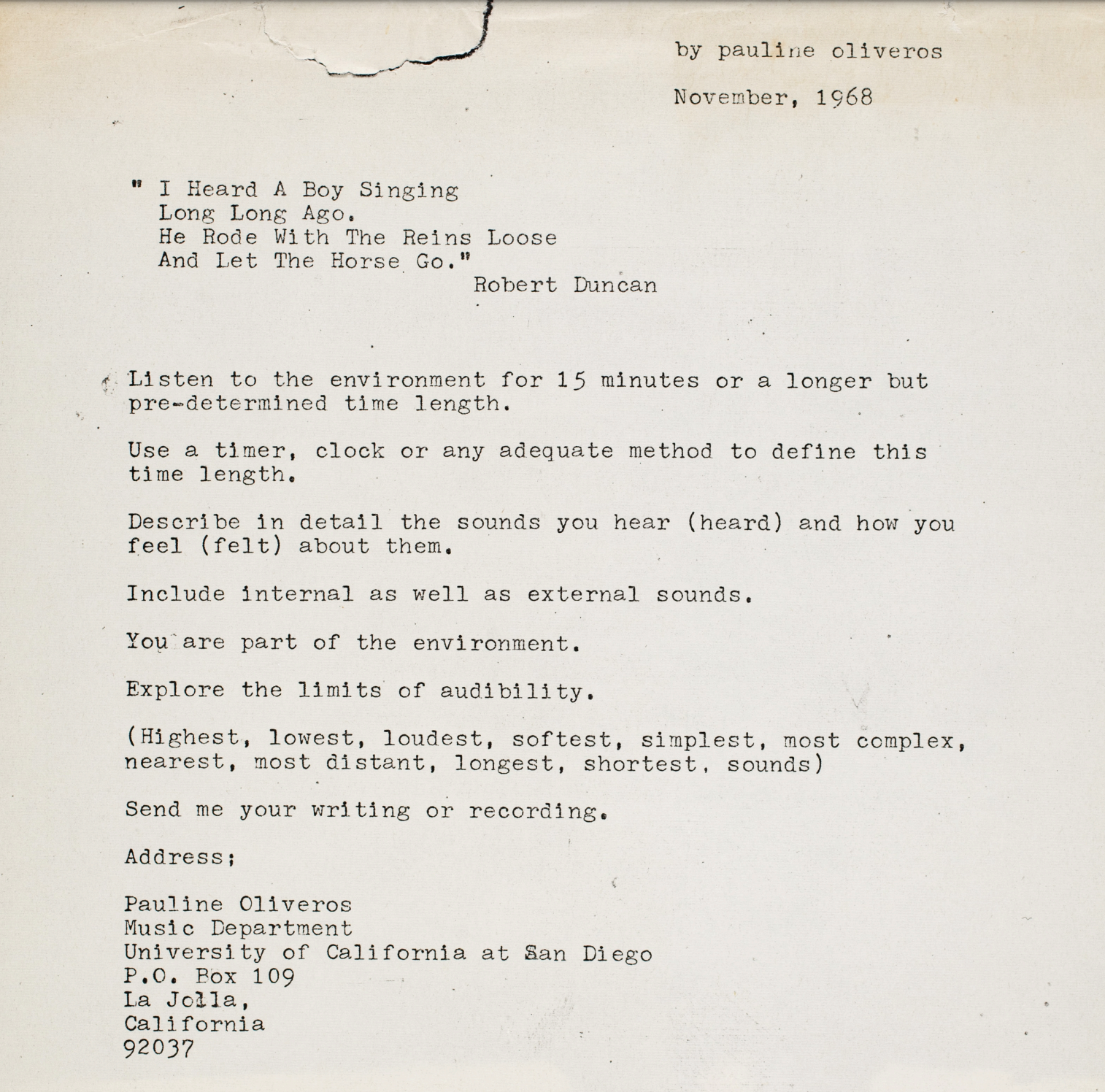
• Listen to the environment for 15 minutes or a longer but pre-determined time length.
• Use a clock or any adequate method to define this time length.
• Describe in detail the sounds you hear and how you feel about them.
• Include internal as well as external sounds. You are part of the environment.
• Explore the limits of audibility: (highest, lowest, loudest, softest, simplest, most complex, nearest, most distant, longest, shortest sound)
Pauline Oliveros, from "Software for People", pp. 28-35 THE POETICS OF ENVIRONMENTAL SOUND
“Go out and listen. Choose an acoustic environment which in your opinion sets a good base for your environmental compositions … What kinds of rhythms does it contain, what kinds of pitches, how many continuous sounds, how many and what kinds of discrete sounds, etc. Which sounds can you produce that add to the quality of the environmental music? Create a dialogue and thereby lift the environmental sounds out of their context into the context of your composition, and in turn, make your sounds a natural part of the music around you. Is it possible?”
Hildegard Westerkamp, in “Soundwalking”, Sound Heritage 3(4), 1974: 25).
(From TECNHE Listening Guide)
The Center for Deep Listening
Pauline Oliveros site
NY Times Article
SONIC MEDITATIONS
A set of 25 text-based instructions meant to provoke thoughtful, creative responses. “Native,” the most commonly cited: “Take a walk at night. Walk so silently that the bottoms of your feet become ears.”